NIBE heating curves
Charts to help you understand and adjust your NIBE heating curve. Compare slopes, offsets and supply temperatures, and download the chart that suits your system.
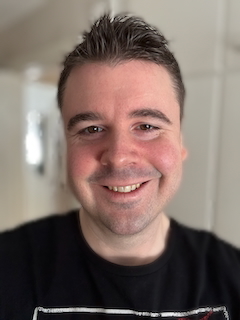
This is the personal website of Erik Nyström. It has been brewing since 1998 and primarily features validated HTML with minimal graphics.
The views expressed here, if any, are my personal views.
“Think of yourself as already dead. You have lived your life. Now take what’s left and live it well.”
Adapted from Meditations 7.56, c. AD 170–180
These quotations use modern English wording, including adaptations and paraphrases.
A moment of Stoicism · Reload for another thought
Charts to help you understand and adjust your NIBE heating curve. Compare slopes, offsets and supply temperatures, and download the chart that suits your system.
Rotary heat exchangers are frost-resistant, not frost-proof. After a winter with my own FTX system in Luleå, these are my experiences with defrosting, preheating and keeping the air moving when temperatures fall below −20 °C.
If your Logitech keyboard produces § when you press <, the fix may be simpler than you think. Here’s the keyboard shortcut that solved it for me.
A long time ago in a galaxy far, far away… on the misty planet of Dagobah, I was first powered on.
My formative years among the swampy wetlands gave me a unique perspective on binary codes: they’re not unlike deciphering the difference between a snake and a vine in the marshes.
With an innate talent for 0s and 1s, I soon found myself relocating to the Coruscant, where I landed a position at the IT department of the Galactic Empire. As luck would have it, I was stationed directly under Darth Sidious. (Honestly, between you and me, he isn’t so much evil as he is just really frustrated with the constantly failing Wi-Fi on the Death Star.)
When I’m not busy rerouting complaints about the Empire’s firewall (that one time it blocked “Wookieepedia” was a massive PR blunder) or trying to convince Lord Vader that “force-quitting” apps doesn’t require actual use of the Force, you can find me indulging in my pastimes. These range from lightsaber dueling with colleagues on casual Fridays, stargazing (quite literally), and running the Death Star’s only podcast: “Dark Side Tech Talks.”
In the Empire, most know me as Erik Nyström (they’re not very creative with names). But among friends, I go by “mx”. So if you ever find yourself at the Death Star and need a quick software patch or just a fun chat about the newest holo-series, you know who to call!
My name is Erik Nyström, and in real life I live in a small town in northern Sweden called Luleå. It is a university and industrial town just below the Arctic Circle, where the winters are long, the summers are bright and the difference between the seasons is impossible to ignore. In summer the nights never really get dark; in winter daylight becomes something you notice and appreciate. My favourite season is autumn, when the nights are cold but the days can still be pleasantly warm, the morning air is crisp and the forests turn red and yellow. I like walking, preferably somewhere with trees, fresh air and enough distance from everything else to sort out whatever happens to be occupying my mind.
I work as an analyst at a large Swedish government agency. Outside work, I am interested in technology, economics, computers, programming and understanding how things work. I have a difficult time leaving an interesting problem alone. If something behaves in a way that does not make sense to me, I tend to keep digging until I understand what is actually happening, often long after a more reasonable person would have decided that it was good enough. This website is partly a product of that tendency.
Computers have been part of my life for as long as I can remember, and programming is one of the things I enjoy most. I like turning an idea into something that actually works, but I am equally fond of the opposite process: taking something that does not work, following it through layers of abstraction and eventually finding the reason why.
Linux has been my preferred computing environment for a long time. I maintain some Linux-related projects and forks, including drivers for old hardware that modern systems have mostly forgotten about. That also gives me a perfectly legitimate excuse to keep old and occasionally strange computers around. I am not nostalgic about bad hardware; I just like machines that are understandable and old things that still have something useful left to do.
One of my current projects is Brevduva, an IRC client written in Rust. Developing a new client for a protocol that most of the world stopped caring about years ago is fairly typical of me. It solves no urgent problem, but I find both the protocol and the engineering interesting, which is reason enough. I also experiment with AI, including running models locally. A modern AI model, a twenty-year-old expansion card and a terminal application can all be interesting for essentially the same reason: there is a system underneath, and I want to understand what it is doing.
My approach to computers is mostly pragmatic. I like Linux, terminal applications, vim-style keybindings and tools that let me work quickly, but I have little interest in turning any of that into an identity. I use a MacBook when it is the better laptop, an absurdly powerful desktop when the extra performance is useful, and obsolete hardware when that happens to be the right tool. The computer should make whatever I am trying to do easier, not become the thing I spend my time managing. There is a separate section on this site called How I compute if, for some reason, you want considerably more detail.
That same curiosity extends beyond computers. I enjoy philosophy and have a particular interest in Stoicism, especially its emphasis on separating what can be controlled from what cannot and on trying to live deliberately rather than react to everything around you. Economics appeals to me for similar reasons: beneath the numbers are systems, incentives and human behaviour, and there is usually more going on than the simple explanation suggests.
I love books and films, particularly worlds that are large enough to disappear into for a while. The Lord of the Rings has probably been the most enduring of these, but Star Wars and Harry Potter are not far behind. I also like writing. One of my projects is a novel called Gården, a psychological horror story with supernatural elements, childhood memories, old technology and a place that becomes increasingly difficult to explain. Fiction gives me another outlet for the same tendency to obsess over details, except that this time I am occasionally allowed to invent the explanation.
People sometimes ask about favourite films, music or food, which is a surprisingly difficult question when you like far too many things. I solved this years ago by simply deciding on a few permanent answers: my favourite film is Scent of a Woman, my favourite band is Metallica and my favourite food is hamburgers. Are those really the things I watch, listen to and eat more than anything else? Not necessarily. The list of films I love would quickly become ridiculous, I probably listen to Opeth more often than Metallica these days, and Zach Bryan is nothing short of a genius. You see the problem. So: Metallica.
Music is another important part of my life. I love listening to it and have a particular interest in hi-fi and acoustics. My main speakers are Ino Audio pi60, designed by Ingvar Öhman, and I also have a dedicated acoustically treated listening room in the basement with i14, X-4 and cr80s.
If none of those model names mean anything to you, that is perfectly reasonable. They probably look like fragments of a particularly bad password. If you are interested in hi-fi, you can look them up; explaining the entire Ino Audio ecosystem here would rapidly turn this biography into something else. Ingvar Öhman is the person behind Ino Audio, and I mention him by name because the design philosophy is an important part of why I ended up with the system. I am probably a somewhat atypical hi-fi enthusiast in that the engineering, acoustics and interaction between the loudspeakers and the room interest me at least as much as the equipment itself.
I also play drums. Playing music scratches a different itch from listening to it, and I enjoy both for different reasons. Sitting behind a drum kit and being part of the music is difficult to compare with sitting perfectly still in front of a pair of speakers and listening to somebody else make it. Despite arranging quite a lot of my life around music, I absolutely hate dancing. Enjoying music and wanting to move rhythmically in front of other people are, as far as I am concerned, entirely separate things.
I like being outside. Walking is one of the simplest things I do and one of the things I value most. A long walk in the forest is a remarkably effective way of organising thoughts. I also enjoy mountain biking and play Pokémon Go rather enthusiastically. I started playing with my children, but at some point my interest appears to have overtaken theirs.
I value a good conversation more than almost anything else. Sitting down over coffee with good friends and attempting to solve the world’s problems is difficult to beat. The problems generally remain unsolved, but that has never made the conversation any less worthwhile.
This website has existed in one form or another since the late 1990s. It has never had a particularly coherent subject, and I have no intention of giving it one now. It is simply a place for things I find interesting, useful, amusing or worth preserving: computers, technical problems, things I have learned, things I have written and whatever else happens to send me down another rabbit hole.
I prefer Linux and use it for most things. I don’t have a favorite distribution in any meaningful sense. Fedora is usually what I end up running because it works well for me and stays out of the way. What matters to me is reducing the distance between thinking about doing something and actually doing it. I like simple tools, predictable systems and workflows that don’t demand unnecessary attention.
That often means vim-style keybindings, keyboard-driven interfaces and programs running in a terminal. Not because terminals are somehow more authentic or make you a better computer user. That whole aesthetic is tiresome. A terminal is excellent when text is the natural interface to the problem and terrible when it isn’t. The computer should serve the user, not the other way around.
A fair amount of my spare time goes into software development, particularly Linux-related projects. Some of that involves maintaining my own forks and writing or adapting drivers for hardware that modern systems have largely left behind. Nothing I do should be confused with working on the upstream kernel. I simply enjoy understanding how things work and making hardware do things it was never expected to still be doing twenty years later.
One of my current projects is Brevduva, an IRC client written in Rust. This is fairly typical of me: spending an unreasonable amount of time building software for a protocol that most people stopped caring about years ago. I also experiment with AI, including running models locally, which is one of the few things I do that can make a modern high-end GPU look as though it has a reason to exist.
For years I could honestly say that I had little use for fast hardware. That is no longer true. My main desktop is built around a Ryzen 7 9800X3D, 64 GB of DDR5 memory and an RTX 5080. Storage is NVMe, and the whole thing sits in a Fractal Design Define 7 with a rather excessive amount of cooling. The objective was not to build a gaming PC, but a computer with enough headroom that the computer itself rarely becomes the limiting factor.
Ironically, it is absurdly overpowered for the games I actually play. On the rare occasions I play anything, it is usually either an old DOS game or something like StarCraft. My gaming requirements could probably be met by a reasonably well-equipped toaster. The GPU earns its keep elsewhere, mostly when I experiment with local AI models.
There is one requirement I care about more than raw performance: silence. I cannot stand noisy computers. Fans ramping up and down, pumps whining, hard drives rattling and small high-RPM fans screaming in the background are all things I would rather not hear. My desktop is, for practical purposes, inaudible during normal use. The dishwasher on the other side of the house makes more noise in my office. That is how I want it.
I use a Keychron Q3 Max TKL with Kailh BOX Jade switches and a Logitech MX Master 3S. The clicky switches are a deliberate exception to my preference for quiet hardware.
Despite having a rather ridiculous main workstation, I still keep old and unusual hardware around. Some of it is necessary for Linux development. If you are working on drivers for old hardware, eventually you need the old hardware. Virtual machines and emulation are useful, but sometimes you need to put an actual card into an actual machine and find out what happens.
I also simply like old computers. They tend to expose more of themselves. Their limitations are obvious, their hardware is understandable, and you can often form a reasonably complete mental model of the entire machine. Modern computers are vastly better in almost every practical sense, but they are also enormous stacks of abstraction sitting on top of other enormous stacks of abstraction. There is something satisfying about working with a machine small enough to understand.
That does not mean I think old hardware is inherently better. Usually it isn’t. I use old computers when they are interesting or useful, and new computers when they are better tools. This seems like it should be an uncontroversial position, but computers have fandoms.
I used IBM and later Lenovo ThinkPads for many years. The old ThinkPads were excellent working machines: durable, serviceable and designed with the rather old-fashioned assumption that the person using the computer might know what they were doing. I no longer use a PC laptop regularly.
My current laptop is a 14-inch MacBook Pro with an M1 Pro. Linux is still my preferred operating system, but I don’t consider operating systems a religion. For a laptop I care about screen quality, battery life, silence and portability far more than upgradeability or theoretical maximum performance, and the MacBook happens to do those things extremely well. I want to open the lid, do what I intended to do, close it again and move on. Ultimately, the best computer is the one that gets out of the way.
Here are a few things I keep around because I would rather not see them disappear from the internet. Some of them are old, obscure or otherwise difficult to find, which is exactly why they are here.
If you own any of the material and would prefer that I did not host it, just contact me and I will remove it.
If you want to get in touch, email is the easiest way. You can find my address at the top of the page, next to the photo. If you would rather chat on Signal, send me an email first and we can sort that out.
I don’t use GPG for sending or reading encrypted email. Encrypted email is just a meme.
You also won’t find me on:
I don’t post on 4chan either. I suppose I do have a Facebook account, but I don’t really use it.